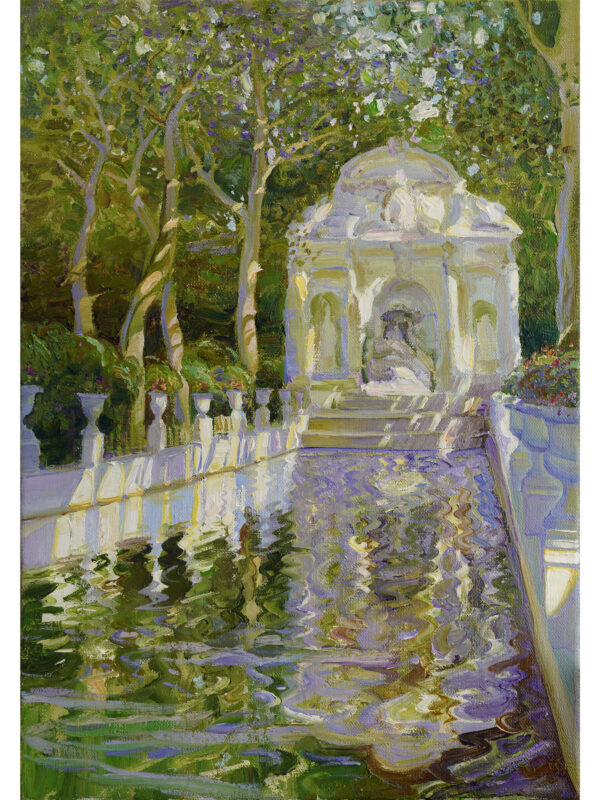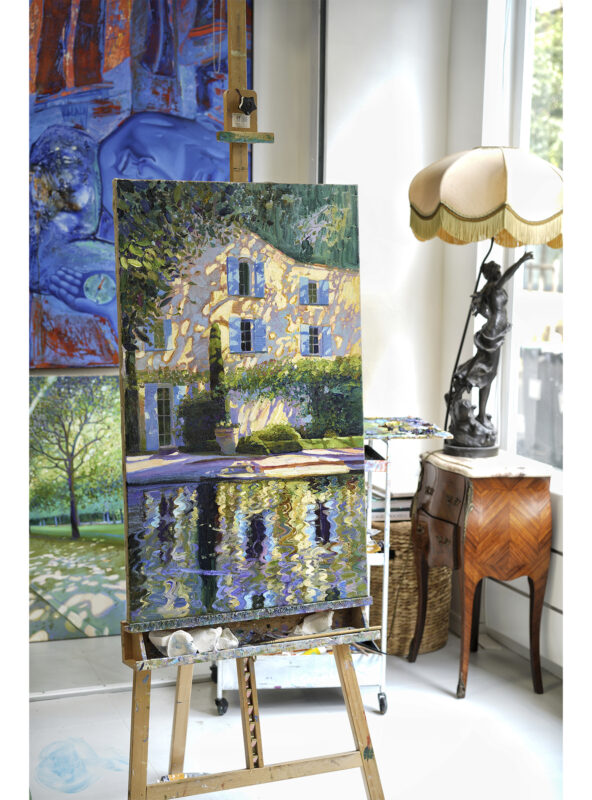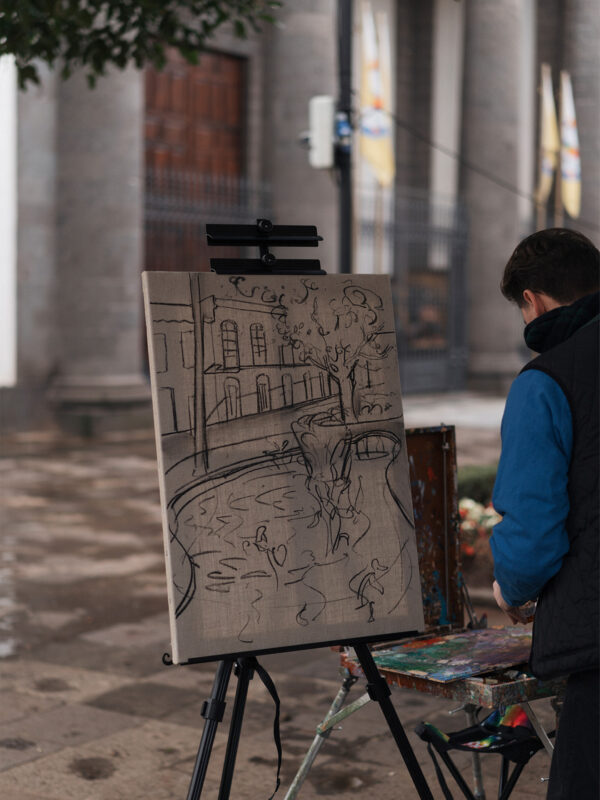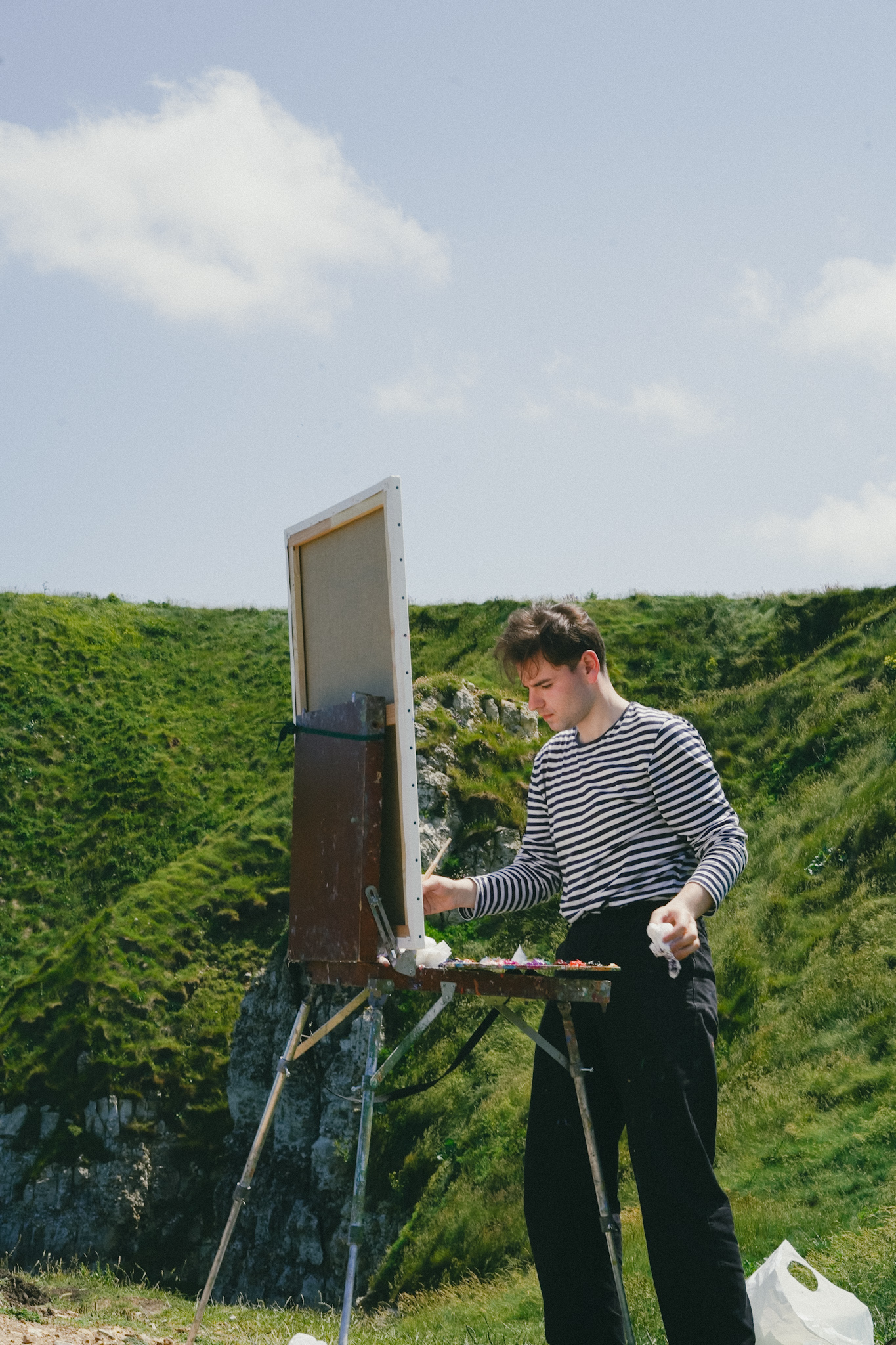
Landscape painting in Sergiu Ciochina’s practice is less a record of a place than a way of giving atmosphere a structure. The painter begins with observed fragments—facades, paths, trees, water, a line of shade—then redraws their relationships until the image carries the emotional pressure of a remembered moment.
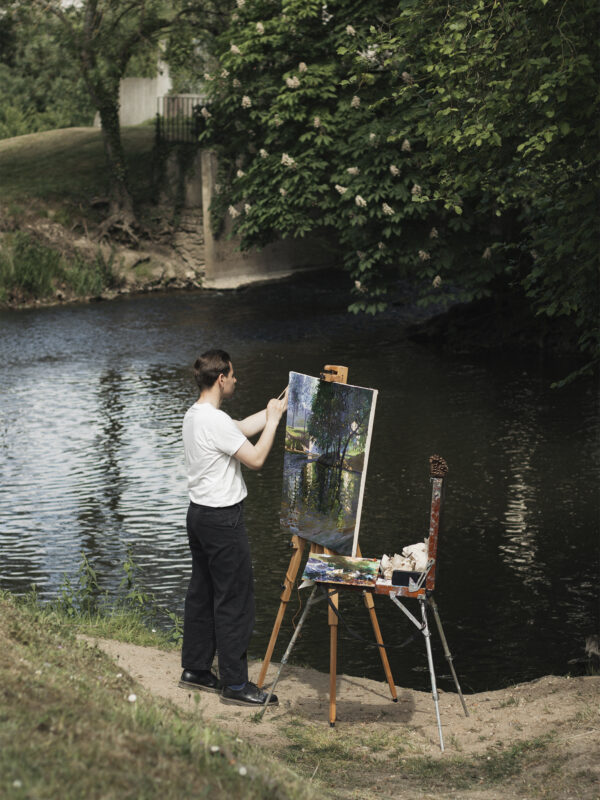
This approach is rooted in an attentive, plein-air way of looking. Working directly before a motif makes light immediate and unstable: colour shifts, edges dissolve, and a familiar street or garden can become unexpectedly theatrical. Ciochina responds to that instability with a vocabulary of abbreviated forms, buoyant contours and concentrated colour. The result is neither strict description nor pure invention, but a landscape reconstructed through perception.
Architecture often supplies the first rhythm. Balconies, windows, stairways and walls appear as anchors within compositions that remain deliberately open. They give the viewer a sense of direction while allowing the surface to breathe. Nature then interrupts the built world: foliage softens a corner, a reflected sky breaks a plane of masonry, or a shadow turns a street into an interior space. These transitions are central to the work’s quiet drama.
Ciochina’s landscapes also retain the directness of drawing. A line may suggest the contour of a roof, the tilt of a trunk or the boundary between sun and shade, but it is never merely descriptive. It carries speed, hesitation and touch. Paint is applied in layered passages and then pared back, letting areas of the image remain spare enough for memory and imagination to complete them.
The places behind these paintings range from Parisian gardens and neighbourhoods to the Normandy coast and Mediterranean light. Yet location is not the final subject. What persists is the sensation of being present: the pause before evening, the sharp clarity of a balcony in summer, the cool blue that gathers across a façade. Each canvas turns a particular view into an intimate, shareable state of mind.
Seen together, these works propose landscape as emotional architecture. Space is built from colour, gesture and remembered light; the familiar becomes personal without becoming closed. Ciochina invites the viewer to enter not only a painted place, but the changing tempo through which that place was felt.
Further reading: Sergiu Ciochina’s artist profile and selected works are available at artserge.com. Biographical context is also published by Arte Laguna World and ArtPeople.